
Introduction to Filling Machines
A filling machine is an essential piece of equipment used in manufacturing and packaging industries. It helps fill containers with specific quantities of liquids, powders, granules, creams, and other products. These machines are widely used in food processing, pharmaceuticals, cosmetics, chemicals, beverages, and personal care manufacturing.
As businesses grow, packaging products manually becomes time-consuming and can lead to inconsistent quantities. A filling machine helps solve these problems by improving speed, accuracy, and production efficiency. Depending on the machine type, it can fill bottles, jars, cans, bags, tubes, and other packaging containers.
Modern filling machines are available in manual, semi-automatic, and fully automatic models. Each option serves different production needs and budgets. Small businesses may prefer compact equipment, while large factories often require automated filling systems that can handle thousands of containers per hour.
Understanding how filling machines work, their different types, and their benefits can help businesses choose suitable equipment for their operations.
What Is a Filling Machine?
A filling machine is a packaging device designed to dispense a measured quantity of product into a container. Its primary purpose is to make the filling process faster, more accurate, and more consistent.
The machine receives a product from a storage tank, hopper, or feeding system. It then measures and transfers the required quantity into the container using a suitable filling mechanism. Depending on the equipment, containers may be positioned manually or moved automatically along a conveyor.
For example, beverage manufacturers use filling machines to fill bottles with water, juice, and soft drinks. Pharmaceutical companies use specialized systems to package syrups and other liquid medicines. Food manufacturers may use filling equipment for sauces, cooking oils, honey, and other products.
The correct filling machine depends on the product’s physical properties, packaging format, required production capacity, and hygiene requirements.
Different Types of Filling Machines
Filling machines come in several designs. Each type is developed to handle particular products and production conditions.
1. Liquid Filling Machine
A liquid filling machine is designed to fill containers with products such as water, juice, milk, cooking oil, shampoo, and cleaning solutions.
Depending on the product, these machines may use gravity, pumps, piston mechanisms, or flow meters to control the filling quantity. Some models handle thin liquids, while others are designed for thicker or more viscous formulations.
Liquid filling machines are widely used in beverage production, chemical processing, cosmetics, and pharmaceutical packaging.
2. Powder Filling Machine
Powder filling machines dispense measured quantities of powdered products into bottles, jars, pouches, or other containers.
They are commonly used for flour, spices, protein powders, powdered supplements, and selected pharmaceutical products. Many systems use auger fillers or other controlled feeding mechanisms to deliver consistent quantities.
The machine design should account for powder density, particle size, dust generation, and flow characteristics.
3. Paste and Cream Filling Machine
Paste and cream filling machines handle thicker products that do not flow as easily as ordinary liquids.
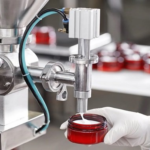
Common applications include toothpaste, cosmetic creams, sauces, gels, peanut butter, and other viscous products. Piston-based systems are frequently used because they can dispense controlled quantities of thicker materials.
These machines help reduce spills and maintain consistent filling performance during production.
4. Automatic Filling Machine
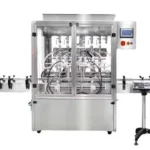
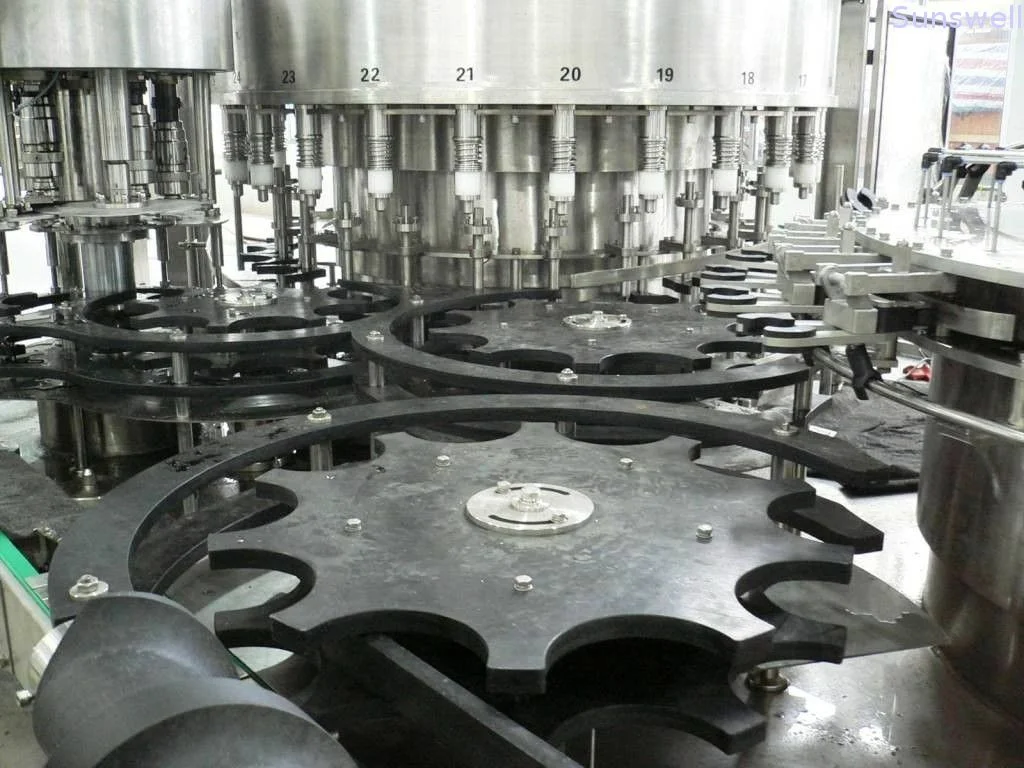
An automatic filling machine performs filling operations with limited manual intervention. Depending on its configuration, it may include container feeding, product dispensing, conveyor movement, and integration with capping or labeling equipment.
Automatic systems are suitable for factories with high production demands. They can improve throughput, reduce repetitive work, and support consistent packaging operations.
5. Semi-Automatic Filling Machine
Semi-automatic filling machines require an operator to perform some tasks, such as positioning containers or starting each filling cycle.
These machines are suitable for startups, small manufacturers, laboratories, and businesses producing limited quantities. They usually require less initial investment than fully automatic systems.
They can also offer flexibility when businesses need to fill different products or container sizes.
How Does a Filling Machine Work?
The working process depends on the machine type, but most filling systems follow several basic steps.
First, the product is supplied to a holding tank, hopper, or feeding system. The machine prepares the product for dispensing and controls its movement through the filling mechanism.
Next, empty containers are positioned beneath the filling nozzles or at the designated filling station. The machine measures the required quantity using a timer, piston stroke, flow meter, weighing system, or another suitable method.
The product is then dispensed into each container. Once filling is complete, the containers move to the next packaging stage, where they may be capped, sealed, labeled, or packed into cartons.
Automated systems can connect these stages to create a continuous production line. Proper setup, calibration, and maintenance help ensure reliable performance.
Key Features of a Modern Filling Machine
When purchasing a filling machine, businesses should evaluate the features that directly affect production quality and efficiency.
- Filling accuracy: Helps maintain consistent product quantities and control material waste.
- Adjustable volume: Allows operators to change filling quantities for different container sizes.
- Production speed: Determines how many containers the machine can process within a specific period.
- Product compatibility: Ensures the machine can handle the product’s viscosity, temperature, and chemical properties.
- Easy cleaning: Supports hygienic operation and efficient product changeovers.
- User-friendly controls: Makes machine operation and parameter adjustment easier.
- Durable construction: Helps the equipment withstand regular industrial use.
- Safety features: Protects operators and supports safe production procedures.
Not every machine includes all these features, so buyers should review the manufacturer’s specifications before making a decision.
Benefits of Using a Filling Machine
A filling machine offers several advantages for businesses that package products regularly.
Improved Production Speed
Manual filling can become inefficient when production volumes increase. A filling machine processes containers more quickly and helps businesses complete large orders within shorter production periods.
Consistent Filling Quantities
Accurate dispensing helps ensure that containers receive the intended quantity of product. This improves packaging consistency and supports inventory control.
Reduced Product Waste
Controlled dispensing reduces spills, overfilling, and unnecessary product loss. This can be particularly valuable when handling expensive ingredients or large production batches.
Lower Labor Requirements
Automated equipment reduces repetitive manual tasks. Employees can focus on quality control, equipment monitoring, container preparation, and other production responsibilities.
Better Product Handling
Suitable filling equipment can reduce unnecessary product contact and support hygienic manufacturing practices. However, cleanliness also depends on proper sanitation, maintenance, and operating procedures.
Increased Business Productivity
A reliable filling machine helps manufacturers manage growing demand, improve workflow, and maintain more predictable production schedules.
Applications of Filling Machines Across Industries
Filling machines are used in many industries because products require different packaging methods and quantities.
Food and beverage industry: Used for bottled water, juices, sauces, honey, cooking oils, dairy products, and other consumables.
Pharmaceutical industry: Used for compatible medicines, syrups, oral solutions, and selected healthcare products with specialized hygiene requirements.
Cosmetics industry: Used for lotions, creams, shampoos, perfumes, serums, and liquid makeup.
Chemical industry: Used for detergents, cleaning products, lubricants, and compatible industrial liquids.
Agriculture industry: Used for selected fertilizers, seeds, pesticides, and other agricultural products, with equipment chosen according to material hazards and handling requirements.
Household products: Used for liquid soaps, disinfectants, surface cleaners, and other everyday products.
Each industry requires suitable materials, safety measures, and cleaning procedures to maintain product quality.
How to Choose the Right Filling Machine
Selecting the right filling machine requires an understanding of your product and production goals.
Start by identifying the material you need to fill. Thin liquids, thick pastes, free-flowing powders, and granules may require completely different mechanisms.
Next, determine your required production capacity. A small business may benefit from a semi-automatic model, while a large factory may need a multi-head automatic machine.
Consider your container type and filling volume. The equipment should accommodate your bottles, jars, pouches, or other packaging formats without requiring excessive adjustments.
Cleaning and maintenance are also important. Choose a design that supports the required hygiene standards and allows convenient access to product-contact components.
Finally, compare the purchase price, installation expenses, spare parts, warranty, technical support, and expected operating costs. Request a demonstration or product test whenever possible.
Maintenance Tips for Filling Machines
Regular maintenance helps extend equipment life and prevent unexpected production interruptions.
Clean the machine according to the manufacturer’s instructions and use cleaning products compatible with its materials. Inspect nozzles, hoses, seals, pumps, valves, and other components for leaks or wear.
Check filling accuracy periodically and recalibrate the machine when necessary. Follow the recommended maintenance schedule for lubrication, component replacement, and mechanical inspections.
Operators should receive proper training before using the equipment. Any unusual noise, vibration, leakage, or change in filling performance should be investigated promptly.
Keeping maintenance records can also help identify recurring problems and improve production planning.
Cost of a Filling Machine
The cost of a filling machine depends on its design, automation level, filling capacity, materials, and additional features.
Manual and semi-automatic machines generally have lower initial costs. Fully automatic systems can require a larger investment because they may include conveyors, multiple filling heads, electronic controls, and integrated packaging equipment.
Other expenses may include installation, training, maintenance, spare parts, transportation, and utilities.
Businesses should compare the total cost of ownership rather than focusing only on the purchase price. A reliable machine that meets production requirements may offer better long-term value than a cheaper model that requires frequent repairs.
Future Trends in Filling Machine Technology
Filling machine technology continues to evolve as manufacturers seek greater efficiency and flexibility. Digital controls and automated monitoring can help operators track performance and identify production issues.
Modern equipment may also offer faster changeovers, improved dispensing accuracy, and better integration with capping, labeling, and inspection systems.
Energy efficiency, reduced material waste, and hygienic equipment design are increasingly important considerations. Flexible machines that accommodate different products and packaging sizes can also help manufacturers respond to changing market demands.
Businesses that select adaptable equipment may find it easier to expand production as their needs grow.
Frequently Asked Questions
1. What is the main purpose of a filling machine?
Its main purpose is to dispense a measured quantity of product into containers quickly and consistently.
2. Which industries use filling machines?
Food and beverages, pharmaceuticals, cosmetics, chemicals, agriculture, and household product manufacturers commonly use filling machines.
3. What is the difference between automatic and semi-automatic filling machines?
Automatic machines perform most filling operations with limited manual intervention. Semi-automatic machines require operators to handle some tasks, such as positioning containers.
4. Can one filling machine handle different products?
Some machines can handle multiple products, but compatibility depends on the filling mechanism, product properties, and cleaning requirements.
5. How do I maintain a filling machine?
Follow cleaning and servicing instructions, inspect components, check calibration, and train operators to use the machine correctly.
6. Is a filling machine suitable for small businesses?
Yes. Compact and semi-automatic models can be suitable for small businesses that need more consistent filling without investing in a complete automated production line.
Conclusion
A filling machine plays an important role in modern manufacturing and packaging. It helps businesses improve production speed, maintain consistent filling quantities, reduce waste, and streamline daily operations.
Choosing the right equipment depends on the product, container type, production volume, budget, and maintenance requirements. By comparing machine types and evaluating long-term operating costs, businesses can make informed purchasing decisions.
Whether you run a small packaging business or a large manufacturing facility, investing in a suitable filling machine can improve operational efficiency and support future growth.